Beyond Heart Cells: The Technologies Expanding the Future of CHD Care
When most people think about HeartWorks, they think about one thing: building hearts.
Those personalized heart cells are a cornerstone of our mission, but they’re only part of the story.
In part 4 of the HeartWorks 101 series, Matt Ames shares two additional technologies that are helping shape the future of congenital heart disease (CHD) care. While each serves a different purpose, they share a common goal: giving patients more options and improving outcomes for people living with complex heart disease.
Innovation Means Solving More Than One Problem
Congenital heart disease presents a wide range of challenges. Some patients need therapies that help strengthen or repair the heart. Others face urgent circulation issues or require a heart transplant.
Because no single technology can solve every problem, HeartWorks is building a platform of innovations designed to address different stages of a patient’s journey.
Two of those innovations include a novel endovascular pump and a technology often referred to as “Heart in a Box.”
A New Approach to Supporting Blood Flow
The first technology Dr. Ames introduces is a battery-powered endovascular pump designed for patients with single-ventricle heart defects.
The pump is inserted into the pulmonary artery and is intended to provide additional oxygenation and blood flow when patients urgently need circulatory support. The device has already been tested in multiple settings and has the potential to become a lifesaving option for certain patients.
For individuals living with complex congenital heart disease, especially those with a single ventricle, maintaining healthy circulation can become increasingly difficult over time. Technologies like this aim to provide physicians with another tool to help stabilize patients when every moment matters.
What Is “Heart in a Box”?
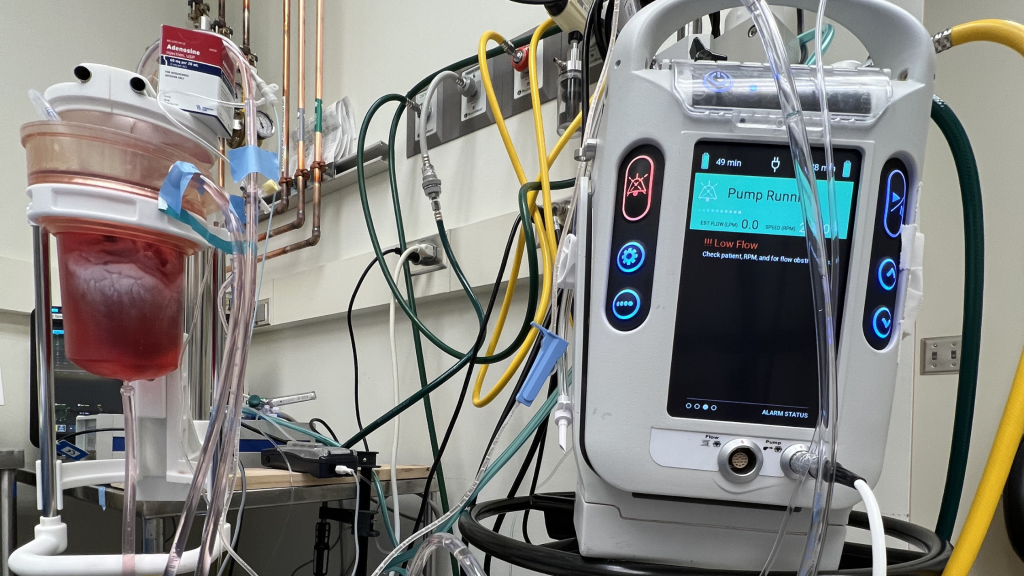
Rather than transporting a donor heart on ice, this technology keeps the heart under physiological, beating conditions inside a specialized enclosed system. By maintaining the heart in an environment that more closely resembles the human body, it may remain viable for longer periods outside the body.
The immediate benefit is clear: improved transportation of donor hearts for transplantation.
But the possibilities extend much further.
Looking Beyond Transportation
HeartWorks is already exploring additional ways this technology could be used.
One exciting possibility is performing certain repairs or procedures on a heart while it remains outside the body before transplantation. Keeping a heart functioning in a controlled environment may create new opportunities for research, testing, and treatment that were previously difficult or impossible.
While these applications continue to be explored, they represent the type of forward-thinking innovation that defines HeartWorks’ approach to congenital heart disease.
Building a Complete Innovation Platform
HeartWorks’ mission has never been about developing just one breakthrough.
It is about creating an ecosystem of technologies that work together to improve the lives of people living with congenital heart disease.
From personalized bioengineered heart cells to advanced circulatory support devices and next-generation organ preservation systems, each innovation addresses a different challenge faced by patients and clinicians.
Together, they represent a future where families have more treatment options, physicians have better tools, and children and adults living with CHD have more reasons for hope.
As Dr. Ames shares throughout the HeartWorks 101 series, innovation isn’t about a single discovery, it’s about building an entire platform capable of changing what’s possible for congenital heart disease.
And this is only the beginning.