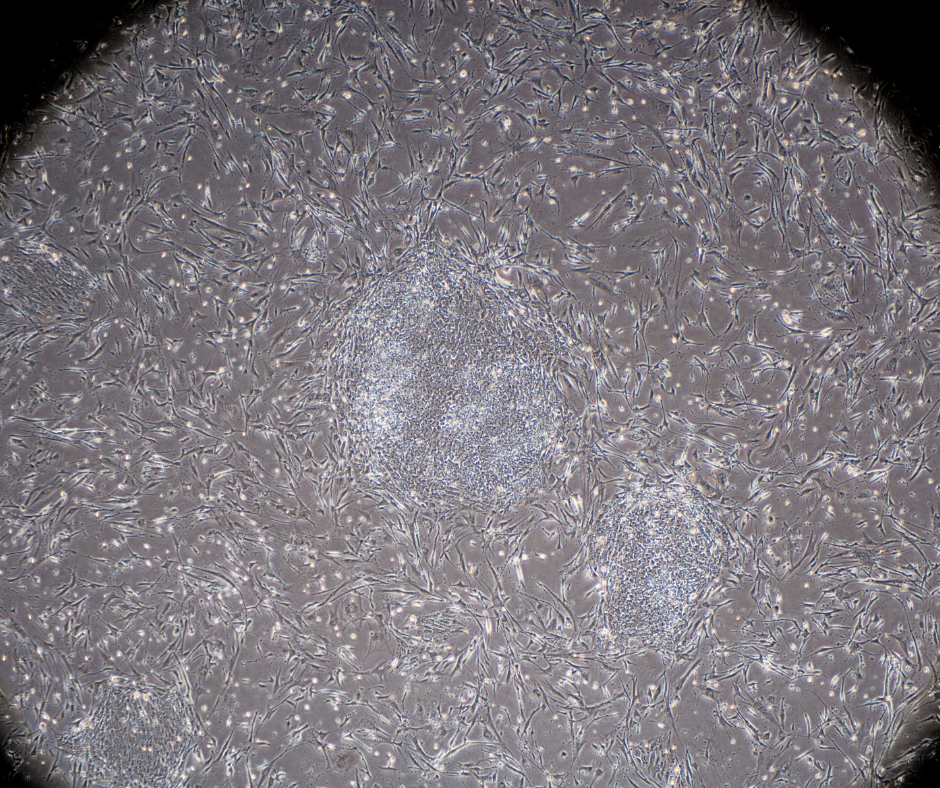
Scientists are discovering remarkable ways to study and repair the human body. One of the most exciting breakthroughs in modern biology is something called induced pluripotent stem cells, often shortened to iPSCs.
While the name sounds complex, the idea behind it is surprisingly powerful: scientists can take ordinary adult cells and turn them back into stem cells.
These stem cells can then potentially become many different types of cells in the body.
What Are Stem Cells?
Stem cells are unique because they can:
• Multiply many times
• Develop into different cell types
For example, stem cells may become:
- Heart cells
- Brain cells
- Blood cells
- Muscle cells
Because of this ability, stem cells help scientists understand how the body develops and how tissues might be repaired.
What Does “Induced Pluripotent” Mean?
The term induced pluripotent stem cell describes two important ideas:
Induced means scientists helped create the stem cell in the lab.
Pluripotent means the cell has the potential to become many different types of cells in the body.
Together, this means scientists can take a normal adult cell – such as a skin cell or blood cell – and reprogram it so that it behaves like an early stem cell.
How Are iPSCs Created?
The process begins with a small sample of a person’s cells.
Scientists then introduce special biological signals that reset the cell, turning it back into a stem cell-like state.
Once reprogrammed, these cells can be guided to become specific types of cells, including:
- Heart muscle cells
- Nerve cells
- Liver cells
- Blood cells
This allows researchers to study how diseases affect different organs and tissues.
Why iPSCs Are Important for Research
Induced pluripotent stem cells have transformed medical research for several reasons.
They help scientists study diseases
Researchers can observe how diseases develop in real human cells.
They support personalized medicine
Because iPSCs can come from a specific patient, researchers can study how treatments may work for that individual.
They allow safer research
Scientists can study cells in the lab without needing to take samples directly from organs like the heart or brain.
iPSCs and Heart Research
Heart disease researchers are especially interested in iPSCs because heart muscle does not easily repair itself.
By creating heart cells from stem cells, scientists can:
- Study congenital heart disease at the cellular level
- Test new medicines
- Explore ways to repair damaged heart tissue
These discoveries could help lead to new treatments for patients in the future.
A Major Breakthrough in Medicine
The discovery of induced pluripotent stem cells changed the field of regenerative medicine. It showed that adult cells are more flexible than scientists once believed.
By learning how to guide these cells, researchers are gaining powerful tools to understand disease and develop new therapies.
FAQs
What are induced pluripotent stem cells?
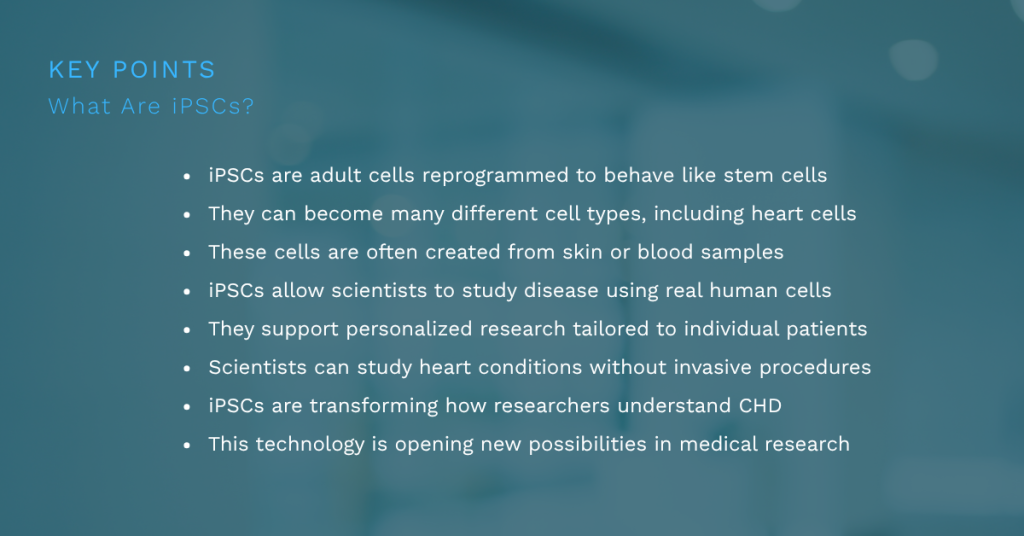
Induced pluripotent stem cells (iPSCs) are adult cells that scientists reprogram to behave like stem cells that can become many different cell types.
How are iPSCs created?
Scientists take cells from skin or blood and introduce biological signals that reset the cells into a stem cell-like state.
Why are iPSCs important?
They allow researchers to study diseases, test treatments, and explore regenerative therapies using human cells.