A simple guide to a powerful shift in how we think about care
For generations, medicine has focused on treating symptoms and managing disease. But what if the goal wasn’t just to manage a condition, but to repair or strengthen the body itself?
That idea is at the heart of regenerative medicine.
Understanding Regenerative Medicine
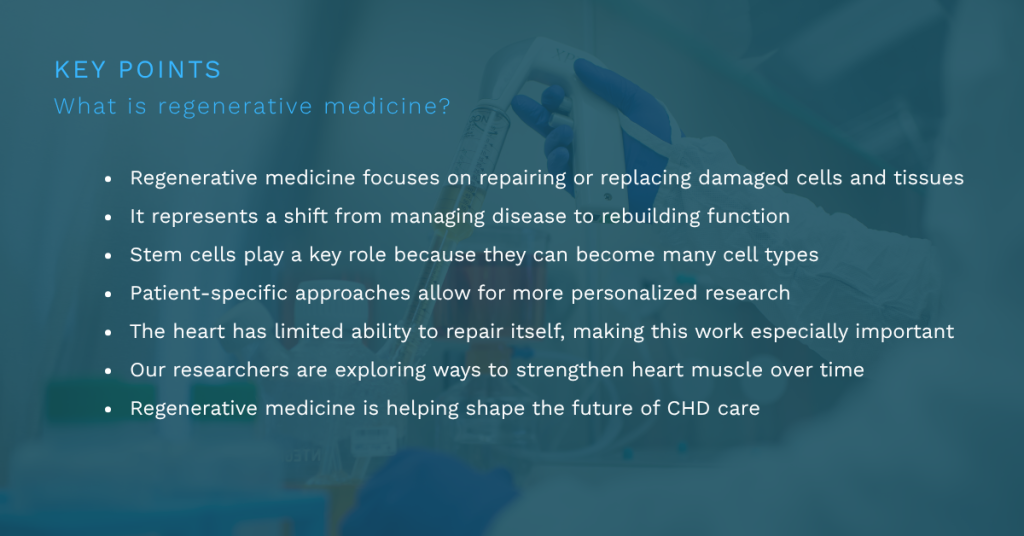
Regenerative medicine is a field of science focused on helping the body repair, replace, or regenerate damaged cells, tissues, or organs.
Instead of only treating symptoms, researchers are exploring ways to address the underlying problem – at the level of the cells.
This could include:
- Repairing damaged heart tissue
- Replacing cells that no longer function properly
- Strengthening organs to improve how they work over time
It represents a shift from managing disease…to rebuilding what’s been lost or weakened.
How Does It Work?
Regenerative medicine uses a combination of advanced tools and technologies, including:
Stem Cells
Stem cells are unique because they can become many different types of cells in the body, including heart cells.
Patient-Specific Cells
Scientists can take a small sample of a patient’s cells and use them to study disease or explore future treatment options.
Tissue Engineering
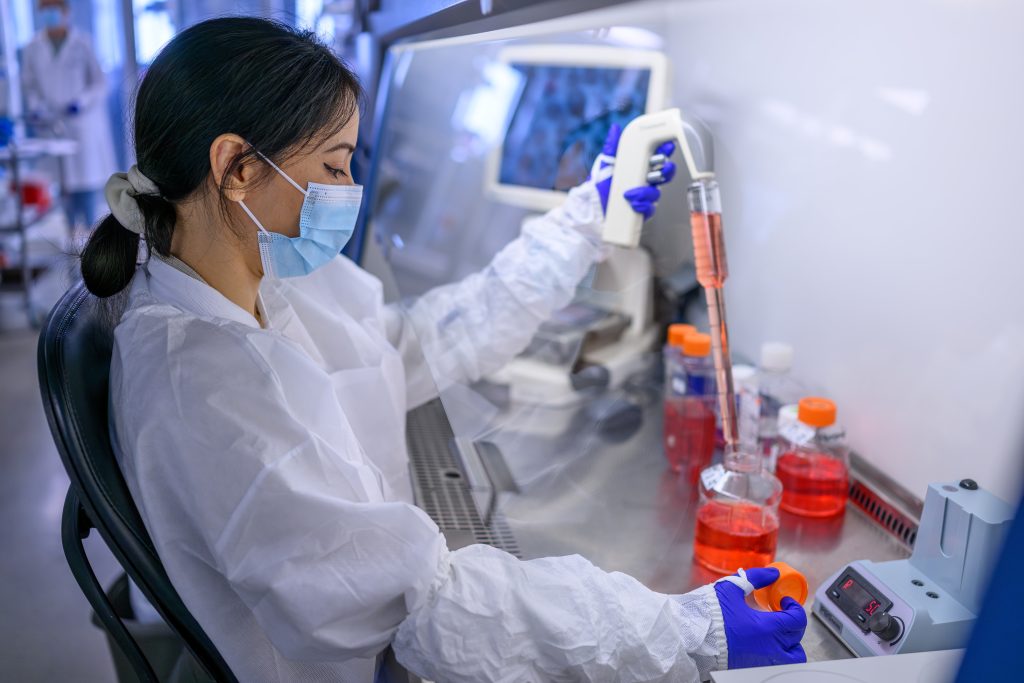
Researchers are developing ways to grow or support tissues outside the body to better understand how they function.
Together, these approaches allow scientists to study disease in new ways and explore how the body might be supported or strengthened over time.
Why It Matters for Congenital Heart Disease
For people living with congenital heart disease (CHD), care often involves multiple procedures and lifelong monitoring.
One of the biggest challenges is that heart muscle does not easily repair itself.
Regenerative medicine offers a new direction, one that focuses on:
- Understanding how heart cells function and respond to stress
- Exploring ways to strengthen weakened heart muscle
- Developing new approaches that go beyond traditional treatments
While much of this work is still in development, it represents an important step toward expanding what may be possible for CHD care in the future.
What Is HeartWorks Exploring?
At HeartWorks, regenerative medicine is a central focus of our work.
We are exploring how a patient’s own cells can be used to:
- Study congenital heart disease more closely
- Create heart cells in the lab
- Support the development of new therapies
Our long-term goal is to help strengthen the heart and improve outcomes, potentially reducing the need for more invasive interventions over time.
A Field Still in Progress
Regenerative medicine is one of the most exciting areas of modern science, but it is also still evolving. Many therapies are still being studied, tested, and refined before they can become widely available. Each step forward requires:
- Careful research
- Rigorous testing
- Strong collaboration between scientists, clinicians, and patients
Progress takes time, but the potential impact is significant.
Looking Ahead
Regenerative medicine is changing how we think about what’s possible in healthcare. It moves us from a world where we only manage disease…to one where we begin to reimagine how the body can heal and function.
For the CHD community, that shift matters. Because every new discovery brings us closer to a future with more options, stronger hearts, and better outcomes for the 1 in 100.
Latest Posts
- Innovation Behind the Scenes: Our Manufacturing Lab Goes Digital
- The Co-op at HeartWorks: How CHD Patient Data Is Changing Heart Research

- HeartWorks Introduces Lab Robots to Advance Cell Manufacturing

- Could My Own Cells Treat My Heart? Inside HeartWorks’ Regenerative Medicine Approach

- New to HeartWorks? Here’s Where to Start.

- Pt 5: Why HeartWorks Works: The People, Technology, and Support Behind CHD Innovation